
Table of content
Key Points
- 01 The average visitor decides within 3–5 seconds whether to stay or leave.
- 02 A Call-to-Action that says "Contact us" buried in the footer is not a conversion strategy.
- 03 Google's data is clear: as page load time increases from 1 to 3 seconds, bounce probability increases by 32%.
- 04 UAE consumers are experienced online shoppers and services buyers.
- 05 The final step in conversion is the form.
- 06 Before fixing anything, establish your baseline.
If your website gets 1,000 visitors per month and generates zero inquiries, the traffic isn’t the problem. Your site is. A well-converting business website should turn 2–5% of visitors into leads. If you’re below 1%, something specific is broken. Here are the 5 conversion killers we see most often on Dubai business websites, in order of impact.
1. No clear value proposition above the fold
The average visitor decides within 3–5 seconds whether to stay or leave. If the first screen of your site doesn’t answer “what do you do, who is it for, and why should I care?”. They’re gone.
What we commonly see: A full-width hero image with a vague tagline like “Elevating Your Business” or “Innovative Solutions for the Modern World.” No indication of the actual service, who it’s for, or what makes this company different from the 50 other results in the same search.
What a high-converting hero section includes:
- A headline that states the outcome, not the process. “Website design that turns Dubai visitors into customers” beats “Professional web development services.”
- A subheading with specifics. Industry, geography, or a key differentiator. “For service businesses with 10–200 employees across the UAE” immediately tells the visitor “this is for me” (or isn’t. Which is also valuable).
- One primary CTA. Not three. One button that tells the visitor what they’ll get: “Get a free site audit” or “See our pricing”. Not “Learn more.”
The test: Show your homepage to someone who has never seen it for 5 seconds, then take it away. Ask them to describe what the business does. If they can’t, your hero section is failing.
2. CTAs that are invisible, vague, or absent
A Call-to-Action that says “Contact us” buried in the footer is not a conversion strategy. It’s a formality.
Where CTAs go wrong:
| Problem | Why it kills conversions |
|---|---|
| Only one CTA at the bottom of the page | 80% of visitors never scroll past the second screenful |
| CTA blends into the page design | If the button looks like everything else, no one clicks it |
| ”Submit” or “Send” as button text | Tells the visitor nothing about what happens next |
| CTA leads to a generic contact page | Breaks the user’s mental flow. They lose context on why they were clicking |
What works:
- Repeat CTAs at decision points. After your value proposition, after social proof, after a service description, and at the page footer. Each one is a chance to convert a visitor who’s seen enough.
- Use action-specific language. “Book a free 30-minute consultation” converts better than “Get in touch” because the visitor knows exactly what they’re committing to.
- Make the CTA visually dominant. Your primary button should be the most colorful, contrasting element on the page. If everything is the same shade, nothing gets clicked.
- Match CTA to page context. A blog post about SEO should link to “Get a free SEO audit,” not a generic “Contact us” page.
3. Page speed is killing mobile conversions
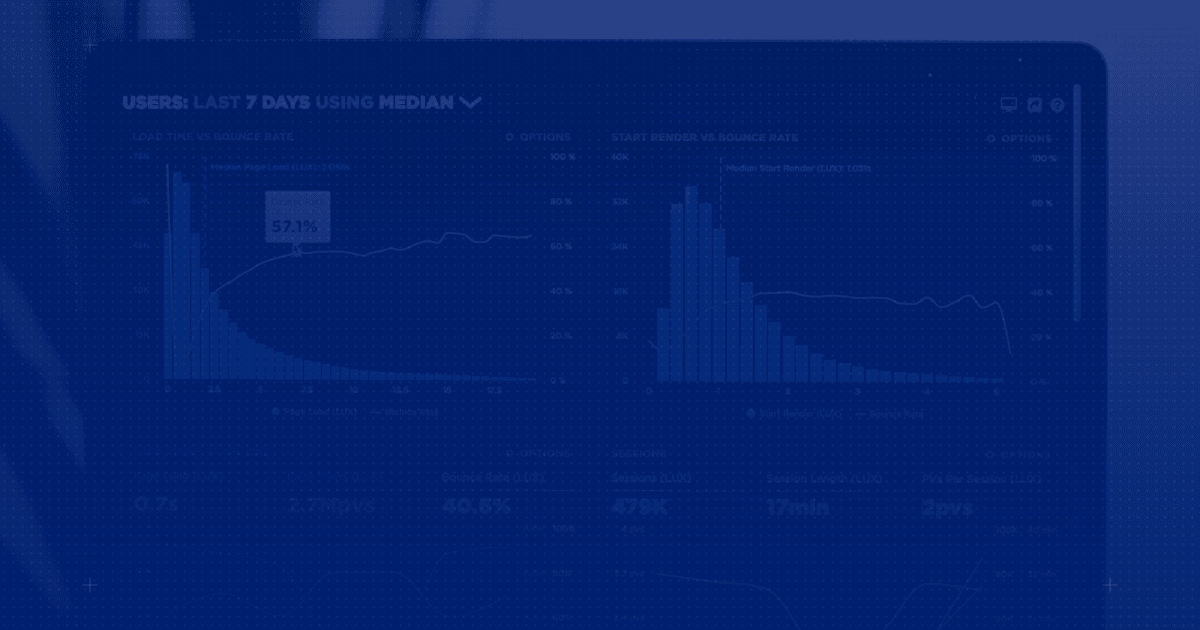
Google’s data is clear: as page load time increases from 1 to 3 seconds, bounce probability increases by 32%. From 1 to 5 seconds, it increases by 90%. In the UAE, where over 60% of traffic is mobile and cellular speeds vary, this effect is even more pronounced.
Common speed killers on Dubai business websites:
- Uncompressed hero images (2–5MB instead of 200KB)
- Autoplay background videos that load before any content
- 10+ third-party scripts (chat widgets, analytics, retargeting pixels, social embeds)
- No lazy loading. Every image on the page loads before the visitor sees the first screen
Minimum benchmark: Your site should score 80+ on Google PageSpeed Insights for mobile. Below 60 means you’re actively losing conversions to speed.
Quick wins that make the biggest difference:
- Compress all images to WebP format, under 200KB each
- Defer all non-essential JavaScript (chat widgets, social pixels) to load after the page is interactive
- Replace autoplay video backgrounds with static images
- Enable lazy loading for any image below the fold
Read more: Webflow SEO best practices including Core Web Vitals optimization
4. Missing trust signals
UAE consumers are experienced online shoppers and services buyers. They’ve been burned before. Your website needs to prove credibility before anyone fills out a form.
Trust signals that matter:
- Client logos. If you’ve worked with recognizable brands, show them. A row of logos above the fold instantly signals “other businesses trust these people.”
- Testimonials with names and companies. “Great experience!” from “Ahmed R.” is worthless. “Carril redesigned our site and form submissions increased 43% in 90 days” from “Sarah Al-Mansouri, Marketing Director at XYZ” is persuasive.
- Case studies with numbers. Not “we helped them grow”. Specific outcomes: “+65% organic traffic in 6 months” or “PageSpeed improved from 34 to 94.”
- Google reviews and ratings. If you have 50+ reviews at 4.5+ stars, display them. Social proof from a third-party platform carries more weight than self-reported testimonials.
- Trade license or regulatory credentials. In the UAE, displaying your DED license number or DMCC membership signals legitimacy. Particularly important for businesses targeting other businesses.
Where to place trust signals: Immediately below the hero section (client logos), alongside CTAs (micro-testimonials), and on your contact/pricing page (case study results). Trust is most effective when it appears right before a conversion point.
5. Your form is too long, too hidden, or broken
The final step in conversion is the form. And it’s where many Dubai websites lose prospects they’ve already convinced.
Form problems we see repeatedly:
| Issue | Impact |
|---|---|
| 8+ fields on initial contact form | Each extra field reduces completion by 5–10% |
| Form on a separate page (not inline) | Adding a click to the conversion path drops completion |
| No validation feedback until submit | User fills 8 fields, hits submit, gets “invalid email” with no indication of which field |
| No confirmation message or redirect | User submits and wonders “did that work?” |
| Form doesn’t work on mobile | Fields overflow, keyboard covers submit button, dropdown menus don’t work |
Best practice for lead generation forms:
- 3 fields maximum for initial contact: name, email, message (or phone for businesses that prefer calls)
- Inline placement on the page where the CTA lives. Don’t send people to a separate page
- Real-time validation showing errors as the user types, not after submission
- Clear confirmation after submission: “Thanks. We’ll reply within 24 hours” with a next-step expectation
- Test on mobile. Open your site on a phone, fill out your own form, and see if the experience is smooth
How to measure your conversion rate
Before fixing anything, establish your baseline.
Conversion rate formula:
(Conversions ÷ Total visitors) × 100
Example: 15 contact form submissions from 1,000 visitors = 1.5% conversion rate.
Benchmarks for Dubai service businesses:
| Conversion rate | Assessment |
|---|---|
| Below 1% | Something is broken. Audit using the 5 points above |
| 1–2% | Below average. Likely 2–3 fixable issues |
| 2–3% | Average. Incremental improvements will compound |
| 3–5% | Good. Focus on traffic volume, not conversion rate |
| 5%+ | Excellent. Optimize for quality of leads, not quantity |
Track conversions in Google Analytics by setting up Goals (GA4 Events). If you’re not tracking conversions at all, that’s the first thing to fix. You can’t improve what you don’t measure.
How we approach conversion optimization
When a client tells us their site “isn’t working,” we start with a conversion audit before touching any code:
- Analytics review. Where are visitors entering the site? Where do they drop off? Which pages have the highest exit rates?
- Heatmap analysis. Where are people actually clicking? How far are they scrolling? Are they interacting with the CTA or ignoring it?
- Mobile testing. Load the site on 3 different phones and attempt to complete the primary conversion action. The mobile experience is often dramatically worse than what the designer saw on their MacBook.
- Form analytics. How many people start the form vs. complete it? Which field causes the most abandonment?
This audit typically identifies 3–5 specific fixes that, combined, produce a measurable increase in conversion rate within 30 days.
Your next step
Run this 5-minute self-audit right now:
- Open your site on your phone. Can you tell what the business does within 5 seconds? Is the CTA visible without scrolling?
- Run a PageSpeed test. Go to PageSpeed Insights and enter your URL. If mobile score is below 70, speed is hurting your conversions.
- Count your form fields. If your initial contact form has more than 4 fields, you’re adding friction that costs you leads.
- Check your trust signals. Open your homepage and count: how many client logos, testimonials with names, or specific results are visible? If the answer is zero, that’s your highest-impact fix.
If you want a detailed conversion audit with specific recommendations for your site, reach out to discuss a UX review. We’ll show you exactly where visitors are dropping off and what to change.